
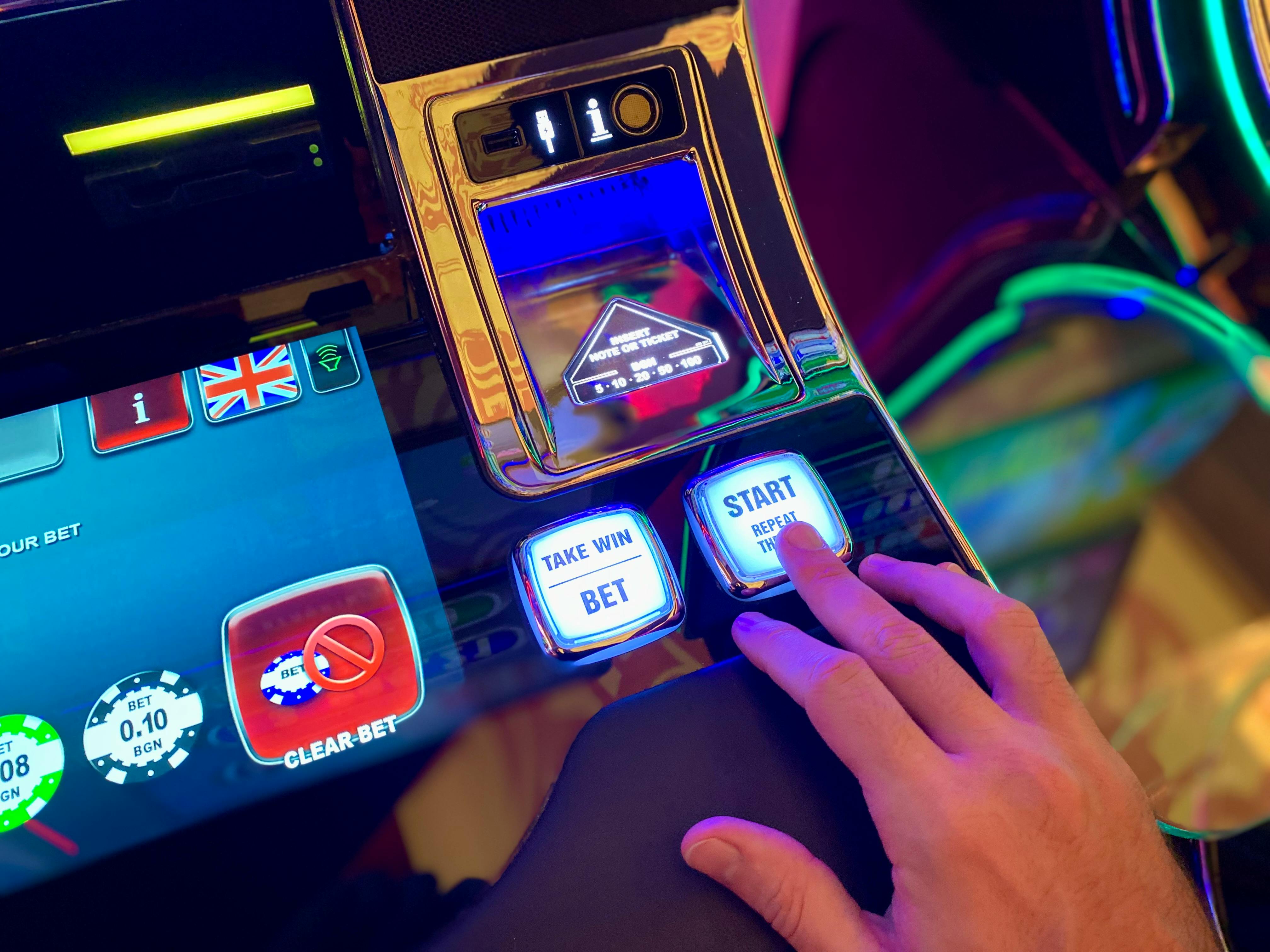
I’ve watched the online casino payment landscape change dramatically over the last few years, and nothing intrigues me more than the quiet revolution happening with prepaid cards. Here at Boho Casino, I see Canadian players turning toward these payment tools for reasons that go way beyond just convenience. The truth is that prepaid cards solve a set of problems that traditional banking methods cannot address, especially in a market like Canada where privacy consciousness and budgeting discipline are deeply ingrained values. I want to walk you through exactly how these payment instruments function in a real online casino environment, stripping away the marketing fluff and giving you the operational details that actually matter when you prepare to fund your account.
Common Questions
Are prepaid card deposits eligible for the welcome bonus?
Certainly, prepaid card deposits work just like any other deposit method for bonus eligibility purposes. The system treats equally based on payment type when applying welcome offers or reload bonuses. The key requirement is satisfying the minimum deposit threshold specified in the promotion’s terms, which typically corresponds to the smallest available voucher denomination. Be sure to read the specific bonus terms before depositing, as wagering requirements and game contribution percentages apply regardless of how you fund your account.
What if my prepaid card deposit does not go through?
A failed deposit attempt does not consume your voucher balance. If the authorization is not finalized on the casino’s payment gateway, the funds stay on your prepaid card exactly as they were before the attempt. You can make another attempt the deposit or use the card elsewhere. The most common causes of failure are typing the wrong PIN, depositing an amount greater than the card balance, or facing a temporary network issue between the casino processor and the card issuer.
What to verify before attempting a failed deposit again?
First, verify your exact remaining balance through the issuer’s website or app rather than relying on memory. Secondly, confirm that the deposit amount you are entering matches the available balance exactly or is lower than it. Finally, check that you have not inadvertently triggered any velocity limits by making multiple rapid attempts; waiting five minutes between attempts usually resolves temporary blocks. If the issue persists, the casino support team can check the transaction logs on their end to identify whether the decline originated from the issuer or the payment gateway.

Are prepaid card purchases considered cash advances by Canadian banks?
Not at all, purchasing a prepaid voucher at a retail location with your debit or credit card is processed as a standard retail transaction, not a cash advance. This means you will not incur cash advance fees or immediate interest charges if you use a credit card to buy the voucher. However, some credit card issuers have begun categorizing certain gift card purchases differently, so it is worth checking your specific card’s terms if you plan to buy large-denomination vouchers regularly with credit rather than cash or debit.
Contrasting Prepaid Cards to Interac, E-Wallets, and Crypto Deposits
I think that players arrive at the best payment decisions when they comprehend the trade-offs across methods rather than just receiving one option praised in isolation bohoscasino.ca. Interac e-Transfer offers near-universal acceptance at Canadian-facing casinos and enables both deposits and withdrawals through the same channel, but every transaction shows up on your bank statement with the recipient’s name clearly listed. E-wallets like MuchBetter, ecoPayz, or Skrill supply a buffer layer between your bank and the casino, decreasing statement visibility, but they require you to trust a third-party fintech company with your funds and personal data, and many impose currency conversion fees that reduce your bankroll if you play in a currency different from your funding currency.

Cryptocurrency deposits offer the strongest privacy model of any method and allow two-way transfers, but they create volatility risk, demand technical competence to manage wallets and private keys safely, and still confront uncertain regulatory treatment in parts of Canada. Prepaid cards hold a unique sweet spot: they equal or exceed cryptocurrency’s deposit-side privacy without any technical complexity or price volatility, but they sacrifice the withdrawal capability that crypto and Interac both provide. Here is a quick breakdown of how the main methods measure up on the factors that matter most:
- Privacy from your bank: Prepaid cards and cryptocurrency share the top spot here, producing no gambling trace on your bank statement whatsoever. E-wallets deliver moderate privacy with one extra buffer layer. Interac leaves a clear paper trail with the casino’s name visible.
- Deposit convenience: Prepaid cards demand a retail trip, turning them the least convenient for spur-of-the-moment deposits. Interac and e-wallets win on speed, completing instantly from your couch. Cryptocurrency sits in the middle depending on your exchange setup.
- Withdrawal capability: Interac and cryptocurrency handle both directions natively. E-wallets also allow withdrawals. Prepaid cards are deposit-only, requiring a separate withdrawal method from the start.
- Cost to use: Prepaid cards involve no purchase fees at most retailers and no deposit fees at the casino. Interac may incur bank fees of $1.50 to $3.00 per transfer. E-wallets often impose 2-5% loading fees plus exchange spreads.
How the Deposit Process Really Works Under the Hood
Let me pull back the curtain on what happens in the seconds between you clicking «Deposit» and seeing your casino balance update. Upon choosing the prepaid card option in the Boho Casino cashier and entering your 16-digit PIN plus the deposit amount, the system makes an API call to the card issuer’s authorization server. This server authenticates the PIN, confirms the balance, and produces a one-time authorization token that represents the approved transaction amount. The token is sent back to the casino’s payment processor, which clears the funds through intermediary acquiring banks before the casino adds the money to your player account. This entire sequence normally finishes within five seconds, although I have witnessed it take up to thirty seconds during peak Friday evening hours when European and North American traffic intersect.
The key detail that most guides overlook is the ability to partially redeem. When you possess a $100 Paysafecard and wish to deposit only $40, the system does not use the whole voucher. The remaining $60 stays active on that PIN, and you can use it for a subsequent deposit. But each partial redemption produces a new leftover balance you have to track manually unless you set up an account directly with the card issuer. I highly advise signing up for whatever account management portal your selected brand provides, since misplacing small residual balances across several partially-used vouchers is the most frequent way players lose value from this payment method. The casino portion of the transaction is immediate and without fees in nearly every instance.
What the Future Holds for Prepaid Casino Payments in Canada
I am watching several trends in the Canadian payments landscape that will influence how prepaid cards function in the online casino space over the next few years. The open banking framework that Canada is gradually implementing will enable third-party payment providers to process transactions directly from bank accounts with customer consent. This could generate hybrid products blending the privacy characteristics of prepaid vouchers with the two-way operation of bank transfers. Several fintech companies are currently piloting virtual prepaid products that can be acquired online with Interac and activated instantly without a physical card, eliminating the retail visit requirement while maintaining the bank statement privacy that makes prepaid popular in the first place.
The regulatory environment is also changing in ways that could bolster prepaid cards’ position. As Canadian provincial regulators and federal agencies intensify their scrutiny of gambling-related financial transactions, the inherent compliance advantages of prepaid vouchers become more pronounced. Prepaid cards provide inherent deposit limits, prevent chargeback risk for operators, and provide a clean audit trail on the casino side while maintaining player privacy on the banking side. This harmony of operator interests, player privacy preferences, and regulatory goals is rare in the gambling industry, and it implies that prepaid methods will not just survive but prosper as the market matures. I foresee to see more dedicated gaming voucher brands joining the Canadian market, more retail distribution points, and tighter integration between issuer mobile apps and casino cashier systems in the coming years.
Security Framework That Deserves More Credit Than It Gets
I aim to review the security model of casino prepaid card payments because it is remarkably clever in ways that even experienced players ignore. When you enter a 16-digit PIN into a casino cashier, you are not disclosing any account that can be emptied beyond the remaining balance on that certain voucher. Measure this to entering debit card details, where a compromised casino or a man-in-the-middle attack could theoretically expose an account containing your total liquid savings. The blast radius of a prepaid card compromise is strictly limited to whatever funds remain unused on that single voucher, which by the time you are making a further deposit might be zero. This isolation principle is what cybersecurity professionals call «damage limitation by design,» and it is built into the architecture rather than added on as an afterthought.
The physical possession requirement adds another security dimension that wholly digital methods lack. To take your prepaid funds, a malicious actor would need tangible access to the unscratched card or would need to have watched and captured the PIN before you used it. Online phishing attacks that deceive players into divulging banking credentials simply do not work against prepaid cards because there are no continuous credentials to phish. Each voucher is a single-use or finite-use token that loses value as soon as it is redeemed. I also appreciate that the major prepaid issuers working in Canada have implemented real-time balance checking via mobile apps and websites, enabling you to verify that a card you just bought actually holds the value displayed on its face before you even depart the store parking lot.
The Actual Privacy Perks Canadian Players Should Understand
I must be straightforward about what prepaid card privacy actually means versus what marketing copy suggests. When you add money with a prepaid voucher at an online casino operating in Canada, the casino itself yet knows who you are because you completed identity verification during registration. The privacy gain is not anonymity from the casino; it is anonymity from your financial institution, payment networks, and the sprawling ecosystem of third-party data aggregators that collect consumer spending profiles. Every time you use a Visa or Mastercard debit card at a gambling merchant, that transaction has a specific Merchant Category Code that marks it as gambling in databases kept by credit bureaus and financial risk assessment firms.
Prepaid cards avoid the MCC system totally because the only transaction your bank observes is the original retail purchase of the voucher, which bears a generic retail or service station code with no gambling association whatever. This distinction is important immensely for Canadians who are employed in federally en.wikipedia.org regulated professions, possess security clearances, or simply value the principle that their recreational spending is nobody else’s business. I have corresponded with players in Ottawa and Halifax who are employed for government agencies and cannot afford even the perception of problematic gambling behavior showing up in any financial background check, no matter how modest and responsible their actual play might be. The household-level privacy layer also warrants mention: prepaid deposits prevent casino transactions from cluttering a shared joint statement and starting unnecessary conversations about discretionary spending you have every right to hold personal.
Cashout Truths and the Two-Method Strategy
Let me share the part of the prepaid card conversation that I notice casino guides consistently dodge, and I won’t gloss over it: you cannot withdraw winnings to a prepaid voucher. The payment rails simply do not run in that direction. Prepaid cards are single-direction deposit tools by design, which bbc.co.uk means every player utilizing them must keep at least one additional verified payment method specifically for cashing out. This is no mere Boho Casino rule oddity; it is a core structural constraint of the prepaid card networks themselves. When you hit a withdrawal request, the casino needs a destination account that can accept funds, whether that is a traditional bank account via Interac e-Transfer, an e-wallet like MuchBetter or ecoPayz, or in some cases a cryptocurrency wallet.
The practical implication is that you cannot maintain perfect financial privacy from end to end if you ever plan to cash out. At some point, your winnings must land in an account tied to your real identity, which leaves a trace. I wish to emphasize that this is no workaround or a failure of the system; it is an AML obligation that every regulated casino operating in Canada must adhere to. The dual-method approach I suggest is simple: use prepaid cards for all deposits to keep your funding side entirely private and untraceable, and assign a single e-wallet or bank account exclusively for withdrawals. Before you fund your account for the first time, be sure to verify a withdrawal method so you are not hurrying to set one up while a pending cashout sits in limbo.
Spending Limits and the Financial Advantage Nobody Talks About
The strict limit imposed by prepaid cards is simultaneously their most frustrating limitation and their greatest habitual edge, and I want to explore both sides honestly. When you enter a store to purchase a prepaid voucher, you are limited by the denominations offered on the shelf and the cash in your wallet. Typical Paysafecard denominations in Canada range from $10 to $250, with some retailers offering $100 as the realistic limit for a single card. You can purchase multiple cards in one visit, but each one acts as a discrete decision point that forces you to confront the amount you are dedicating. This resistance is the opposite of rash spending increases, which is just what makes prepaid cards the single most effective budgeting tool I have ever seen.
Put this to a credit card deposit, where the only restriction is your credit line and the emotional separation between clicking a button and incurring debt is alarmingly large. With prepaid cards, once the voucher balance hits zero, you are stopped until you actually travel somewhere and purchase another one. That inherent break has prevented more reckless late-night deposit sprees than any player protection alert ever could. I am not stating this to treat players like children; I am saying it because I have reviewed the deposit histories of thousands of accounts and the trend is unmistakable. Players funding with prepaid cards show far more stable spending levels over time, fewer rapid escalations, and significantly fewer instances of deposit method switching mid-session compared to players using bank transfers or cards.
How the Boho Casino Platform Functions Especially Well With Prepaid Deposits
I have examined prepaid card deposit flows on dozens of casino platforms, and the integration quality differs significantly, so let me describe what makes a platform authentically prepaid-friendly versus one that only tolerates the method. The Boho Casino cashier interface detects prepaid card transactions and manages them through a specialized payment gateway designed for the authorization patterns these vouchers demand. You will not experience the timeout errors that trouble platforms routing prepaid transactions through generic card processing pipelines. The deposit minimums match common voucher denominations, so you will not end up unable to use a $10 or $20 card because the platform requires a $25 minimum deposit. More importantly, the platform handles partial redemptions smoothly, displaying your remaining voucher balance after each deposit.
The larger game library also matters for prepaid users in ways that are not instantly obvious. If you are funding with a fixed-amount voucher, you desire the flexibility to extend that bankroll across various game types with varying minimum bet sizes. The slot collection includes penny stakes on classic three-reelers to higher-volatility video slots with feature buy options that let you jump directly into bonus rounds. Table game enthusiasts will discover live dealer blackjack and roulette tables with limits accommodating both conservative and aggressive betting styles. The platform also runs regular promotions that fit well with prepaid deposit patterns, including reload offers that compensate the consistent, moderate deposit sizes that prepaid users usually make.
The Prepaid Cards Truly Represent within the Casino Context
When I discuss about prepaid cards for casino deposits, I am referring at a specific financial instrument that operates on a closed-loop or semi-closed-loop network completely disconnected from your personal bank account. The most recognizable name in Canada is undoubtedly Paysafecard, but the ecosystem also includes Neosurf, Flexepin, and various co-branded vanilla Mastercard or Visa gift cards that support online gambling transactions. These are not credit cards with a prepaid feature bolted on; they are standalone vouchers purchased with cash or debit at physical retail locations like Petro-Canada, Circle K, Shoppers Drug Mart, or thousands of independent convenience stores across every province. Each card carries a unique 16-digit PIN code hidden under a scratch-off layer, and that code represents a specific monetary value you have already paid.
This genius of this system is that it creates an absolute firewall between your casino activity and your primary banking relationships. Even the most advanced e-wallets cannot fully replicate this because they still leave a trail back to your funding source. The physicality of the purchase matters more than most players realize. When you walk into a store and hand over cash, you are conducting a transaction that appears on no personal financial statement as a gambling-related expense. Your bank statement will never show a line item linking you to an online casino. I have spoken with Canadian players who were denied mortgage refinancing because their bank flagged frequent transactions to gaming-related merchants, and prepaid cards completely sidestep that risk. The trade-off, which I will be honest about, is that you must physically go somewhere to buy the voucher, and you cannot withdraw winnings back to a prepaid card.
Frequent Errors and How Players Get Around Them
After watching thousands of prepaid card transactions move through casino platforms, I have recorded the failure modes that confuse new users, and most of them are completely preventable with a measure of upfront knowledge. The number one frustration I come across is declined transactions on cards that the player knows have enough balance. This almost always traces back to the issuing bank’s gambling block on vanilla Visa or Mastercard gift cards. Not all prepaid cards are created equal; open-loop cards that carry Visa or Mastercard branding and can be used anywhere those networks are accepted often have gambling transactions blocked at the network level irrespective of the available balance. Closed-loop vouchers like Paysafecard and Neosurf are specifically designed to work with gambling merchants and do not face this restriction.
A further issue I see regularly involves players attempting to deposit amounts that do not match available voucher denominations. If you have a $50 card and try to deposit $55, the transaction will decline even though you might have other funds available elsewhere, because the prepaid system cannot combine funding sources in a single transaction. The solution is to either make two separate deposits or to use the issuer’s account management portal to combine multiple vouchers into a single balance before initiating the casino deposit. I also need to mention the expiry issue, which catches players who stockpile cards during a promotion and then forget about them. Treat prepaid cards like perishable goods; buy them close to when you intend to use them, and redeem them fully rather than leaving small balances scattered across multiple partially-used vouchers.
